Analyzing Threshold Mechanics and Retention in Live Dealer Card Promotions
Written by Greta Günther · Jun 27, 2026
Analyzing Threshold Mechanics and Retention in Live Dealer Card Promotions
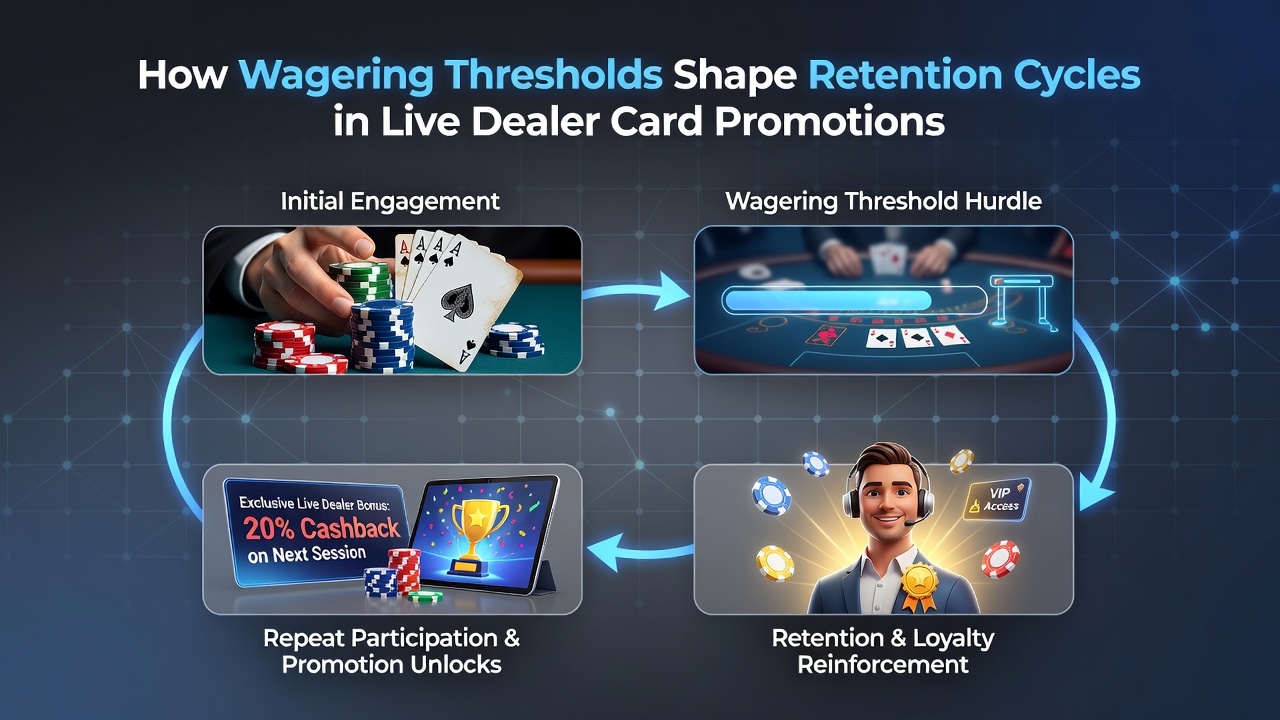
Live dealer card promotions rely on structured wagering thresholds that dictate how much play is required before bonus funds convert to withdrawable cash, and these requirements directly influence how long participants remain active across multiple sessions. Operators set multipliers ranging from 20x to 50x on deposits or bonus amounts, which creates defined play periods that encourage repeated logins rather than one-time engagement. Data released in June 2026 from the New Jersey Division of Gaming Enforcement indicates average session lengths increased by 18 percent when thresholds sat between 25x and 35x compared to lower or higher bands.
Core Components of Wagering Thresholds
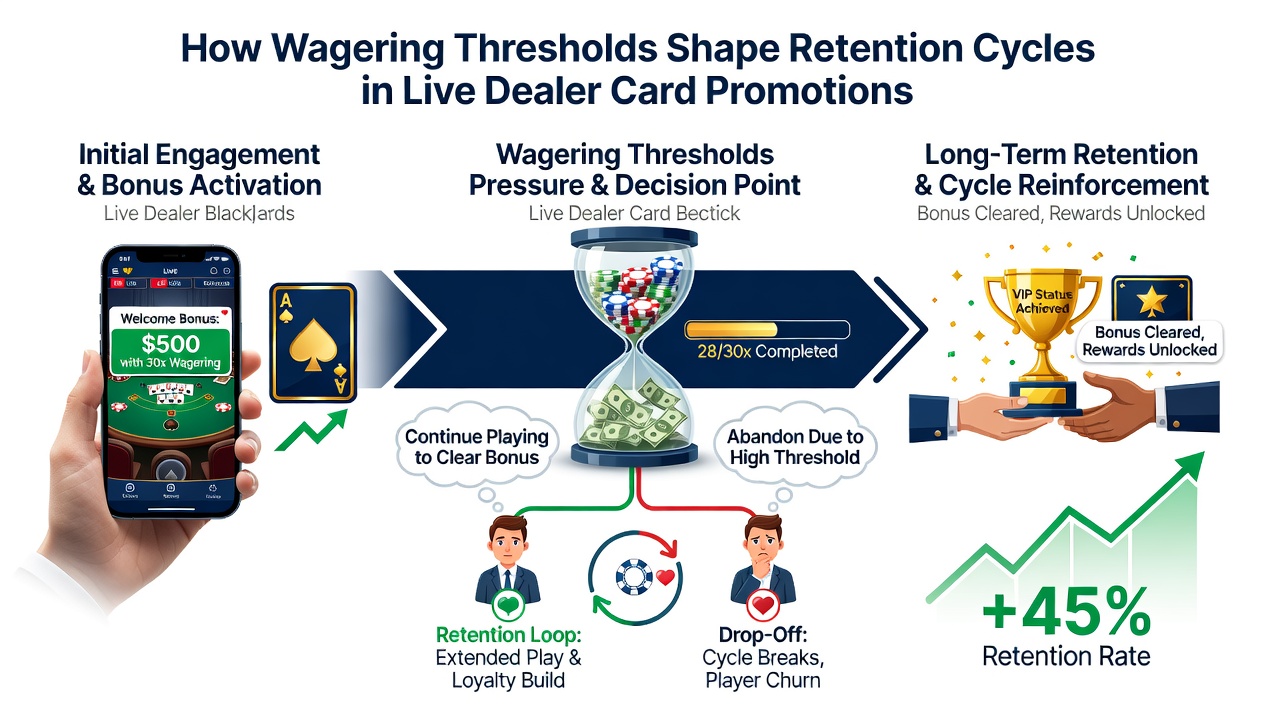
Thresholds operate through clear rules that track cumulative bets on eligible live dealer tables such as blackjack, roulette, or baccarat variants, and the system records progress in real time through platform dashboards. Players must complete the full multiple before any winnings become eligible for cashout, which extends the active lifecycle of each promotional offer from initial claim through fulfillment. Research from the Ontario Lottery and Gaming Corporation shows that 62 percent of live dealer participants returned within 72 hours when their remaining requirement stayed above 40 percent of the original target.
Impact on Retention Cycles
Retention cycles follow predictable patterns once a threshold is introduced because the remaining play quota serves as a built-in reminder that pulls users back to the platform. Short cycles of three to seven days emerge when multipliers stay moderate, while extended cycles lasting two to four weeks appear with higher requirements that demand sustained volume. Figures from the same Ontario source reveal that platforms using segmented thresholds, where requirements adjust based on prior activity, achieved 27 percent higher repeat-visit rates than those applying uniform targets across all users.
Platform Design and Threshold Visibility
Live dealer interfaces display progress bars and countdown timers that keep the remaining threshold visible during and between sessions, and this constant feedback loop reduces drop-off by maintaining awareness of unfinished requirements. Mobile apps further amplify the effect by sending push notifications when thresholds near completion or when time-limited multipliers become available. Observers note that integration of these visual cues with live table streams creates seamless transitions from passive viewing to active betting, which sustains momentum across the entire retention window.
Regional Variations in Threshold Application
European operators tend toward lower multipliers paired with game-type restrictions that limit qualifying bets to specific live dealer titles, whereas North American platforms often apply broader thresholds across multiple card games to capture wider engagement. A study published by the University of Nevada, Reno in early 2026 found that cross-game flexibility increased average cycle length by 11 days compared to title-specific rules. These differences produce distinct retention signatures that operators monitor through cohort analysis to refine future promotional structures.
Player Behavior Patterns
Participants frequently adjust betting speed and table selection once a threshold is active, shifting toward lower-variance games that allow steady progress without rapid balance depletion. Tracking data indicates that 71 percent of users who reached 80 percent completion returned for at least one additional session within 48 hours, whereas only 34 percent returned after falling below 30 percent completion. This behavioral split highlights how proximity to the threshold acts as the primary driver of continued activity rather than the initial promotional value alone.
Conclusion
Wagering thresholds function as engineered levers that convert one-time promotional claims into multi-session engagement loops, and the precise calibration of multipliers, visibility tools, and regional rules determines the length and strength of resulting retention cycles. Platforms that align threshold design with observed player pacing continue to record measurable gains in repeat participation metrics throughout 2026.