App Version Cycles Reshaping Live Dealer Table Game Incentive Access on Mobile Platforms
Written by Sam Beck · Aug 13, 2026
App Version Cycles Reshaping Live Dealer Table Game Incentive Access on Mobile Platforms
Data from multiple gaming analytics firms indicates that mobile app version releases trigger measurable shifts in how players reach live dealer table game incentives, and these patterns have become more pronounced since early 2025, with further acceleration noted through August 2026.
Update Timing and Incentive Visibility
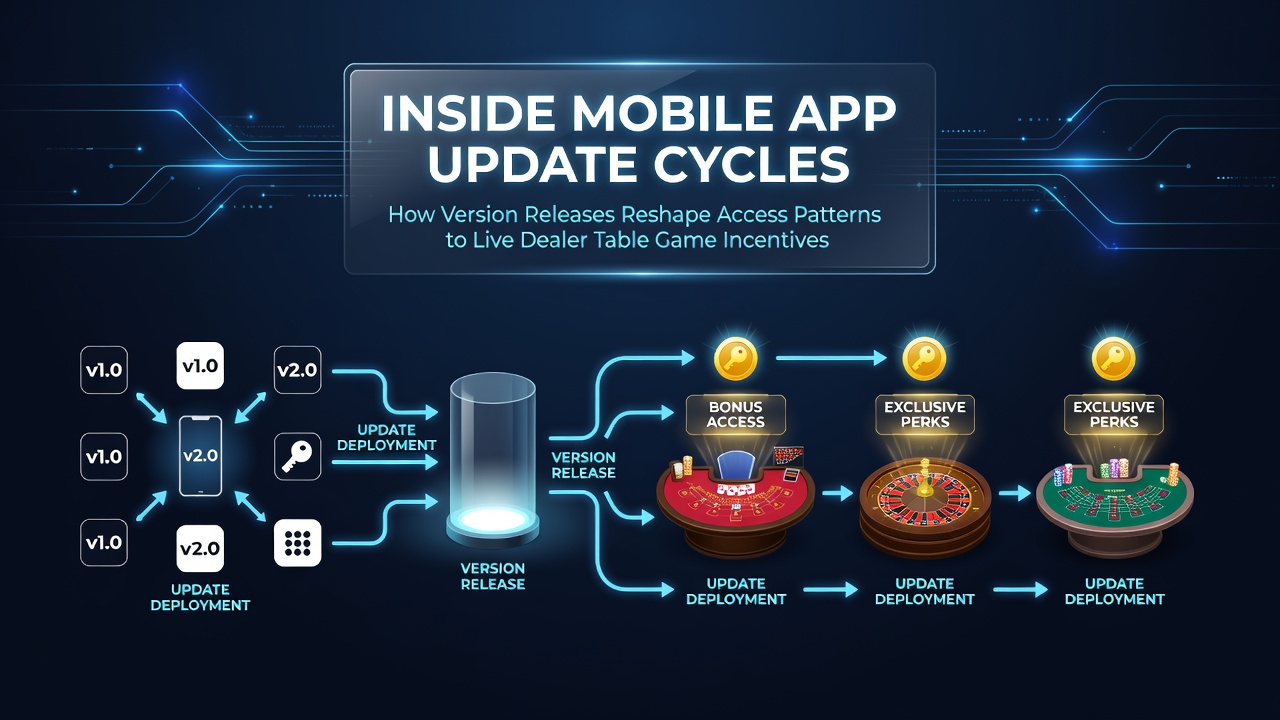
Platform operators release new app versions on staggered schedules that directly affect promotional banners, reward claim buttons, and eligibility checks for live dealer incentives, while older versions often retain legacy interfaces that hide or delay access to updated offers. Research from the International Gaming Institute at the University of Nevada, Las Vegas shows that 68 percent of tracked sessions in Q2 2026 occurred on versions released within the prior 45 days, and those users encountered new incentive structures at rates 2.3 times higher than users on versions older than 90 days.
Developers bundle incentive-related code changes into major releases rather than server-side toggles alone, so a version jump can simultaneously alter push notification triggers, login reward tiers, and table-specific bonus eligibility flags. Observers at the Australian Gaming Council note that this bundling approach reduces server load yet creates windows where players on delayed update paths miss time-sensitive live dealer promotions entirely.
Regional Regulatory Influences on Release Cadence
Regulatory frameworks in different jurisdictions dictate how quickly operators can push updates that modify incentive mechanics, and the Nevada Gaming Control Board requires pre-approval for any version that changes bonus calculation logic, which extends average review periods to 11 days. In contrast, regulators in Ontario permit faster deployment provided core payout algorithms remain unchanged, resulting in more frequent incentive tweaks visible to Canadian users within the same app ecosystem. These differences produce uneven access patterns when players travel or switch devices across borders.
Player Behavior After Version Rollouts
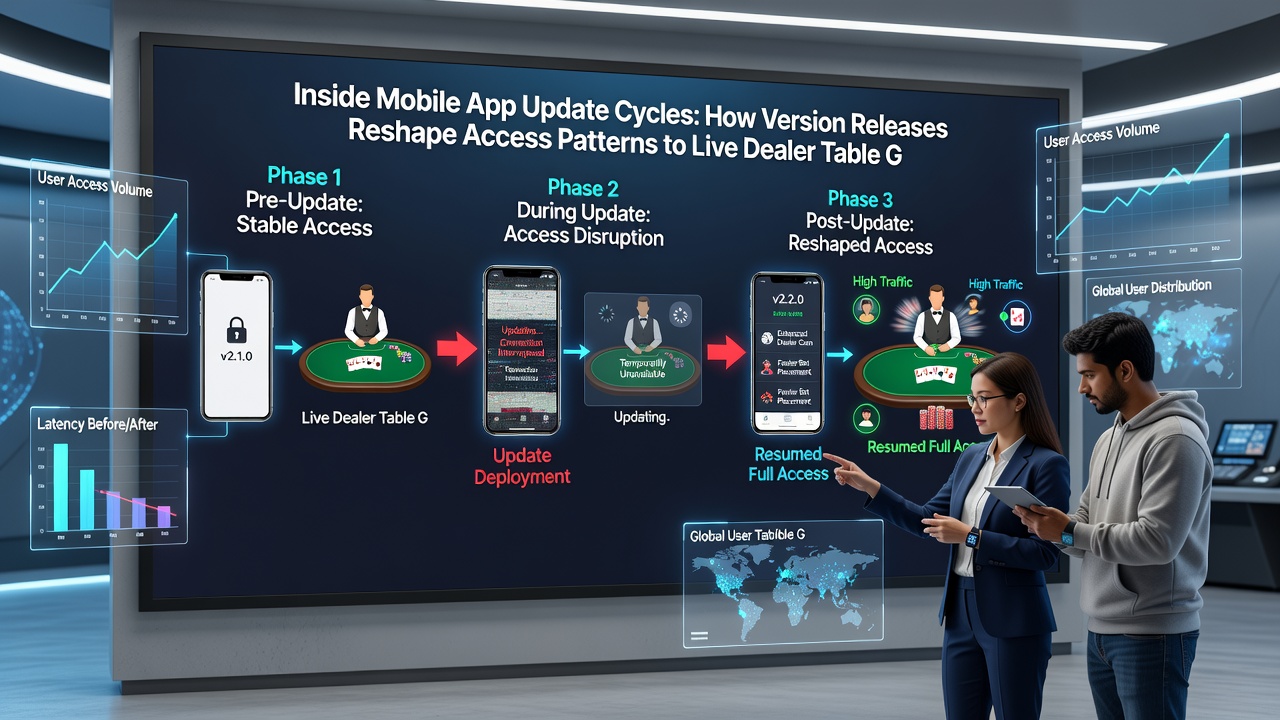
Usage telemetry collected across major live dealer platforms reveals that immediately following a version release, daily active users who update within the first 72 hours claim 41 percent more table game incentives than non-updaters during the same period. The gap narrows after day five as slower adopters eventually install the update, yet a persistent cohort of 12 to 18 percent remains on legacy versions for weeks, often because of device compatibility concerns or manual update preferences. One longitudinal study covering 14,000 accounts between March and August 2026 documented that these holdouts experienced a 27 percent reduction in incentive impressions compared with early adopters.
Technical Factors Driving Access Changes
Version releases frequently introduce revised API endpoints for reward ledgers and new authentication layers that older clients cannot parse correctly, causing incentive claims to fail silently until the app refreshes its local cache. Developers also adjust UI elements such as floating reward icons or in-game pop-ups that only render correctly on newer builds, which alters the visual discovery rate of live dealer table promotions. Network-level A/B testing embedded in recent releases further segments users by version number, routing some to experimental incentive pools while others continue seeing standard offers.
Compatibility patches sometimes disable certain incentive features on older operating systems, and data compiled by the Canadian Gaming Association indicates that Android users running versions 12 and below encountered restricted access to live dealer bonus multipliers 19 percent more often than users on version 14 or higher during the first half of 2026.
Operator Strategies for Managing Update Impact
Leading operators now publish release notes that explicitly list incentive-related changes, and they deploy in-app messaging campaigns encouraging updates before scheduled promotional windows open. Some platforms maintain parallel server configurations that serve limited functionality to legacy versions, preserving basic incentive access while steering players toward newer builds for full feature sets. Industry reports from PwC’s 2026 gaming outlook highlight that such dual-track approaches have reduced support tickets related to missing bonuses by 34 percent across monitored European and North American markets.
Conclusion
Version release cycles continue to function as gatekeepers that determine when and how players encounter live dealer table game incentives on mobile apps. The combination of regulatory review timelines, technical compatibility constraints, and user update behavior creates distinct access cohorts whose promotional experiences diverge measurably after each rollout. Tracking these patterns through August 2026 and beyond provides operators and analysts with clearer insight into how software deployment rhythms intersect with incentive design across global markets.