Demographic Patterns Driving Customized Reward Structures in Portable Live Card Table Ecosystems
Written by Greta Günther · Jun 13, 2026
Demographic Patterns Driving Customized Reward Structures in Portable Live Card Table Ecosystems
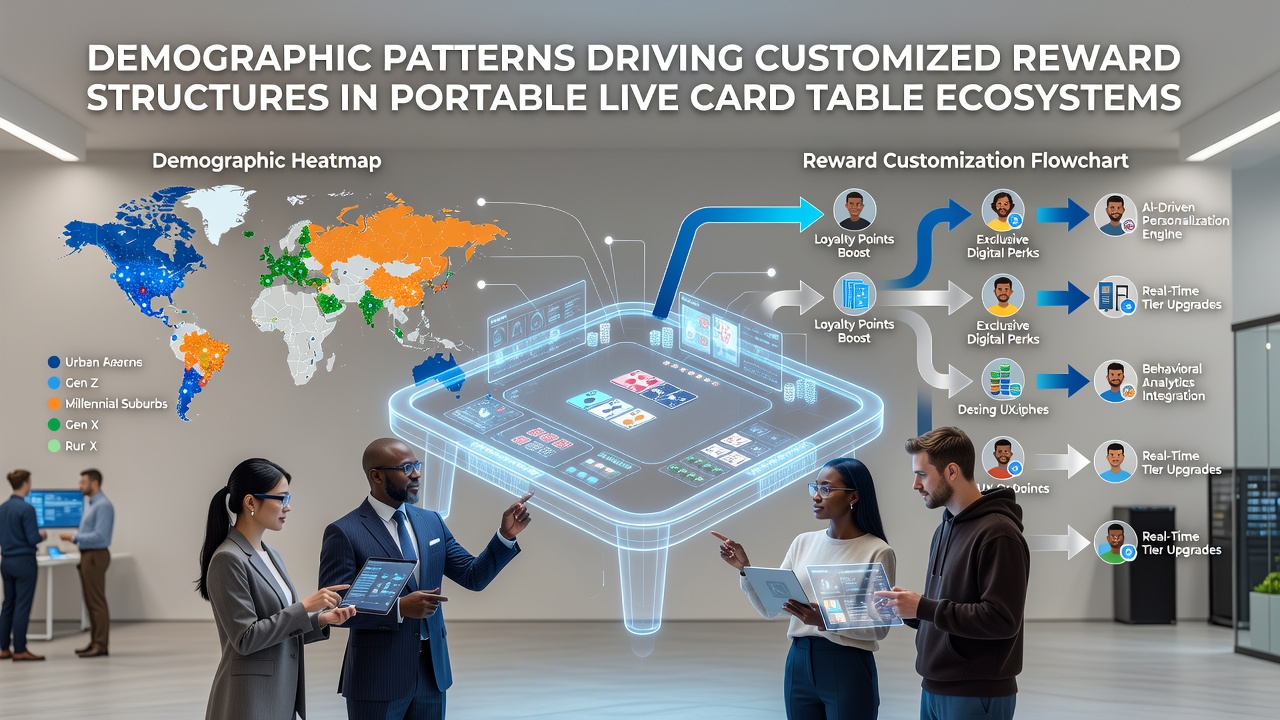
Portable live card table ecosystems have expanded rapidly as developers integrate real-time demographic analysis into reward allocation systems, and operators adjust bonus structures to match observed player segments across mobile platforms. Studies released in June 2026 from regional gaming authorities show distinct patterns in how age cohorts, geographic origins, income brackets, and participation frequencies shape the customization of incentives such as deposit matches, loyalty multipliers, and progressive side bet unlocks in live dealer environments.
Age-Based Segmentation in Mobile Reward Design
Younger participants aged 21 to 35 demonstrate higher engagement with instant reward triggers and social sharing features, which prompts platforms to deploy time-limited multipliers tied to session streaks and referral bonuses. Data indicates these users respond to tiered structures that escalate quickly through initial levels, whereas those aged 36 to 55 prefer sustained progression systems linked to cumulative play volume and milestone achievements that unlock higher table limits or exclusive live dealer rooms. Observers note that operators in Southeast Asian markets have adjusted their June 2026 campaigns to emphasize hybrid models that blend both approaches after tracking cross-generational retention metrics.
Geographic and Cultural Influences on Incentive Structures
Regional player bases drive further customization, with users from high-density urban centers in North America showing preference for cashback mechanisms calibrated to volatility tolerance while participants from European markets favor reward bundles that include tournament entries and multi-game access passes. Australian regulatory reports highlight how cultural factors around session length affect reward timing, leading developers to calibrate notification schedules that align with local peak hours without overlapping traditional work patterns. These adjustments occur through algorithmic processing of location data combined with self-reported preferences during account setup.
Income Levels and Spending Pattern Correlations
Income segmentation reveals that mid-tier earners allocate rewards toward extended play sessions with lower per-hand risk thresholds, prompting the creation of scaled deposit incentives that match contribution levels rather than flat percentages. Higher-income segments receive offers centered on premium table access and personalized dealer interactions, supported by spending analytics that track average bet sizes across portable interfaces. Research from Canadian provincial gaming commissions demonstrates that these differentiated structures maintain consistent uptake rates when calibrated against verified transaction histories rather than broad demographic assumptions alone.

Gender Participation Trends and Reward Preferences
Participation data across platforms shows balanced gender distribution in core card game categories yet distinct preferences emerge in reward types, with female players engaging more frequently with community-driven challenges and collaborative bonus pools while male cohorts gravitate toward competitive leaderboards and high-stakes progressive features. Platform analytics from June 2026 updates indicate that these patterns hold steady across multiple jurisdictions, allowing operators to refine interface elements such as reward preview displays and notification cadences accordingly. Operators achieve this through anonymized aggregation rather than individual profiling to comply with emerging data protection standards.
Integration of Behavioral Data with Demographic Inputs
Portable ecosystems combine demographic profiles with real-time behavioral signals including session duration, game selection sequences, and device usage patterns to refine reward delivery timing. This integration produces dynamic structures where players receive offers that align with both static characteristics and evolving habits, such as shifting from deposit bonuses to free play credits once monthly volume targets are met. Industry analyses from the National Center for Responsible Gaming underscore how these layered approaches support sustained participation without exceeding established spending boundaries across tested user groups.
Regulatory Context and Platform Adaptations
Regulatory frameworks in multiple regions now require transparency in how demographic data informs reward customization, leading developers to publish summaries of their segmentation methodologies. Platforms operating in June 2026 have incorporated audit trails that document decision pathways from raw demographic inputs to final offer generation, satisfying oversight bodies in both North American and Asia-Pacific markets. These measures coincide with broader industry shifts toward verifiable fairness in promotional mechanics for live table products delivered via mobile channels.
Future Trajectories in Customized Reward Ecosystems
Emerging patterns suggest continued refinement as machine learning models incorporate additional variables such as device type preferences and cross-platform migration behaviors. Operators anticipate further segmentation refinements that address niche cohorts including students, shift workers, and frequent international travelers who exhibit unique timing and access requirements. Data aggregation from multiple sources continues to inform these developments while maintaining compliance with regional privacy regulations that govern the use of location and transaction records.
Conclusion
Demographic patterns provide the foundational inputs that shape customized reward structures within portable live card table ecosystems, and platforms apply these insights through systematic data processing that respects regulatory boundaries. Continued monitoring of age, geographic, income, and behavioral variables supports ongoing adjustments that align incentives with observed user segments across mobile environments.