Tracing Player Advancement in Layered Reward Systems Across Diverse Table Game Variants
Written by Kai Hayes · Aug 22, 2026

Tracing Player Advancement in Layered Reward Systems Across Diverse Table Game Variants
Table game ecosystems in casinos worldwide have developed structured reward mechanisms that allow participants to advance through cumulative play across multiple variants, and these systems track activity in blackjack, roulette, craps and poker derivatives to build player status over time. Observers note that operators compile data from various games into unified accounts where points accumulate based on wager volume and game type, creating pathways that reward consistent engagement rather than isolated sessions. According to figures from the Nevada Gaming Control Board, table game revenues reached substantial levels in recent quarters with loyalty integrations playing a central role in retention metrics for properties operating across several game formats.
Core Mechanics of Cumulative Reward Ladders
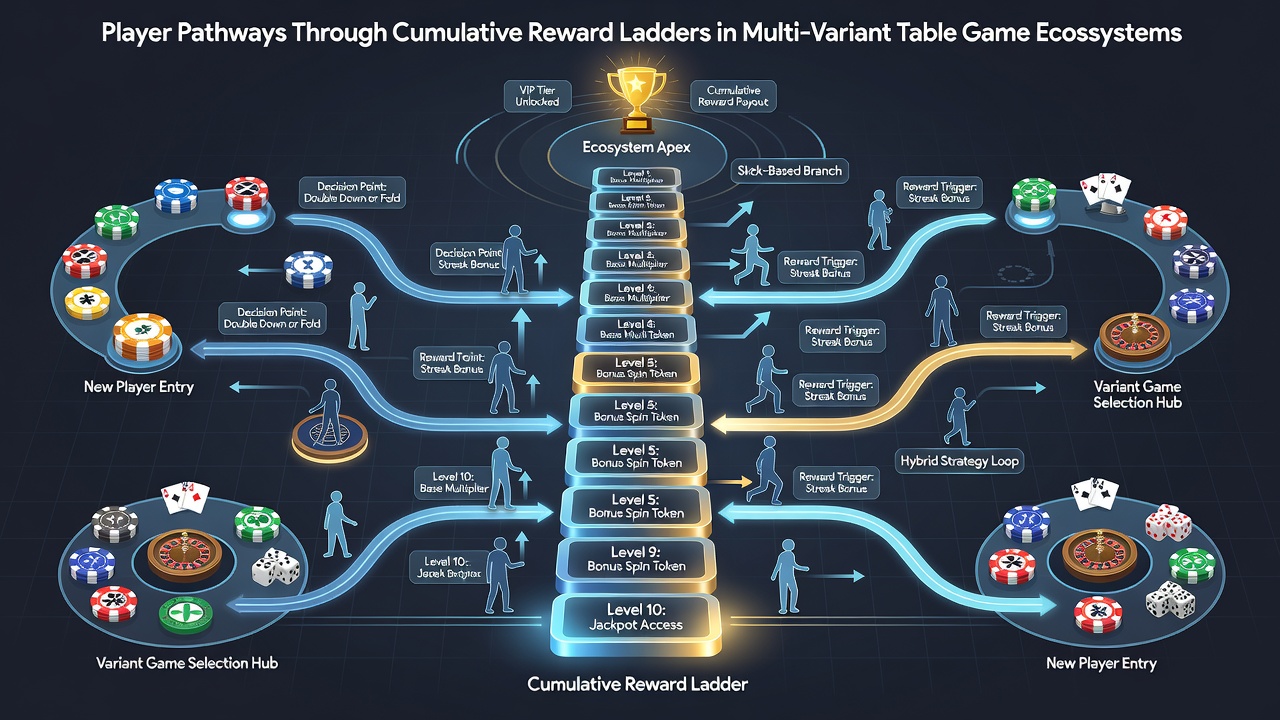
Players begin at entry-level tiers where basic incentives such as free play credits or meal vouchers activate after reaching initial point thresholds, yet advancement to mid-tier status requires sustained activity across different table variants because operators assign weighted values to each game to balance participation. A blackjack session might generate points at one rate while a roulette spin sequence contributes at another, and this weighting encourages exploration of multiple options within the same ecosystem. Data indicates that systems often reset or adjust point accrual during promotional windows, such as those observed in August 2026 when several major properties introduced seasonal multipliers tied to live dealer formats.
Those who study these structures find that ladders typically feature five to seven distinct levels, with each step unlocking enhanced benefits including priority seating, dedicated hosts and customized comps calculated from historical play patterns. Research from industry reports shows that crossover play between variants accelerates progression because combined totals from blackjack and poker tables feed into the same cumulative balance, reducing the time needed to qualify for higher rewards.
Pathway Variations Across Game Types
Multi-variant environments create distinct routes depending on whether participants favor skill-oriented games like blackjack or chance-based options such as roulette, and operators adjust reward multipliers accordingly to maintain engagement across the floor. For instance, a player focusing on craps might accumulate points faster during high-roller periods while a poker enthusiast benefits from tournament integrations that feed into the main ladder. Figures reveal that properties in regions like Australia have reported increased utilization of these cross-game systems, with regulatory oversight from bodies such as the New South Wales Independent Liquor and Gaming Authority ensuring transparency in point valuation and redemption processes.
What's interesting is how mobile interfaces now mirror physical floor pathways, allowing users to monitor cumulative progress through apps that aggregate data from both live and digital table sessions. This integration supports seamless transitions between variants without resetting accumulated totals, and experts have observed higher retention rates among players who navigate multiple game types within a single reward cycle.
Regional Implementations and Data Patterns
In North American markets, table game reward ladders often tie into broader loyalty networks that span multiple casino properties, enabling point transfers that extend pathways beyond single locations while European operators emphasize localized tiers with variant-specific bonuses for games like baccarat alternatives or sic bo. A study released by the University of Nevada Reno Gaming Research Center highlighted how cumulative tracking influences play duration, noting that participants reaching mid-ladder stages demonstrate extended session lengths across combined game portfolios. Canadian provincial regulators, including those in Ontario, have documented similar patterns where reward structures promote balanced participation rather than concentration in one variant.
Operators monitor demographic data to refine ladder thresholds, and reports from August 2026 indicate adjustments in several jurisdictions to align with evolving player preferences for hybrid live and virtual experiences. These modifications maintain the core principle of cumulative accrual while adapting point earning rates to sustain interest across the ecosystem.
Conclusion
Cumulative reward ladders in multi-variant table game settings function as interconnected systems that convert play across blackjack, roulette and related formats into progressive benefits, with data from regulatory agencies and academic sources confirming their role in shaping long-term participation. Pathways evolve through weighted point systems and regional adaptations that respond to market conditions, allowing players to advance based on total activity rather than isolated game choices. Continued integration with digital platforms supports these mechanisms by providing real-time visibility into status and available redemptions, ensuring the structures remain functional elements of modern casino operations.